UP-NS Merger Impact
Explore how this proposed merger could affect freight traffic, local jobs, neighborhood safety, and environmental health in Houston’s East End, with resources for community organizing.
Fighting for Transportation Equity in Houston’s East End
Houston’s East End and Fifth Ward sit at the intersection of some of the busiest freight rail corridors in North America. For decades, our communities have absorbed the costs of that infrastructure — blocked crossings, delayed emergency response, diesel pollution, noise, and physical isolation — while receiving none of the economic benefits that railroads promise in their merger filings.
We are not waiting for someone else to fix this.
Documenting What Railroads Won’t
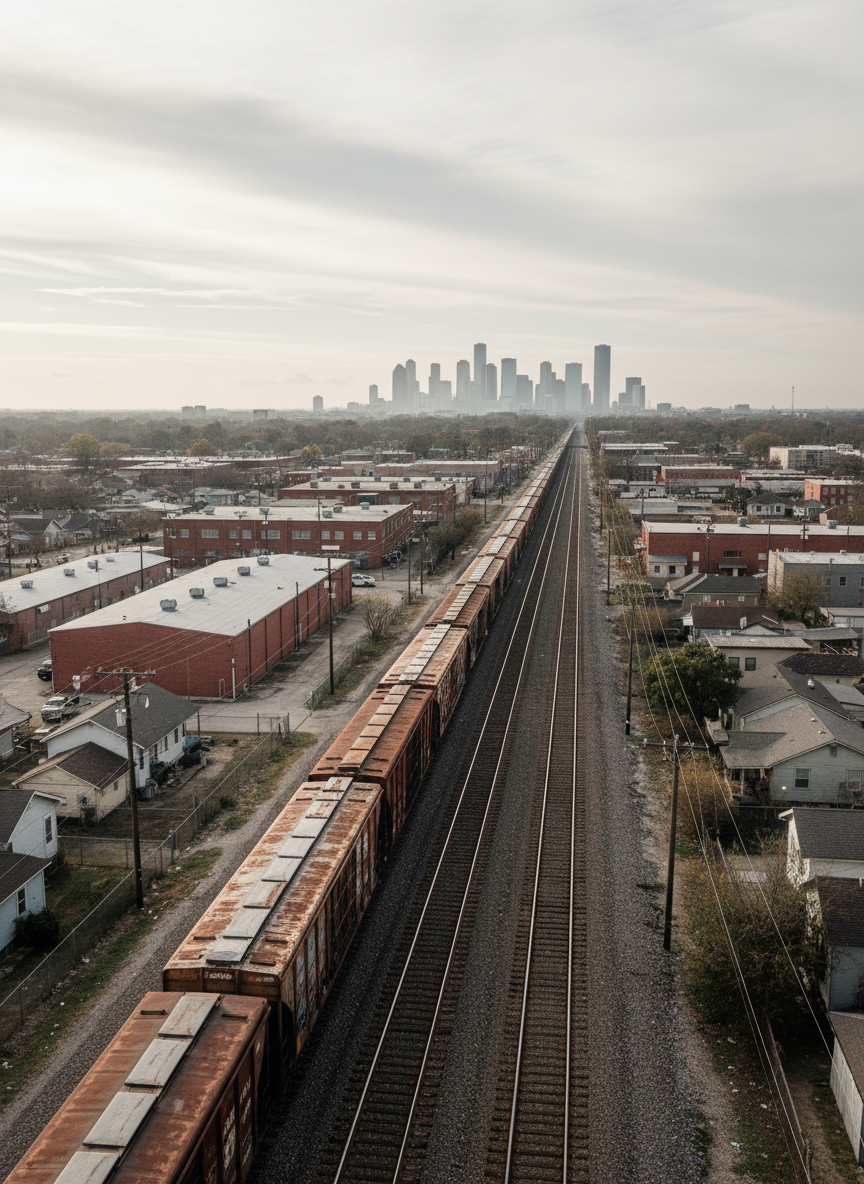
When trains block crossings in wealthy neighborhoods, it makes the news. When they block crossings in our neighborhoods, it gets logged as a routine complaint — if it gets logged at all. We have been systematically documenting blocked crossings and filing complaints with the Federal Railroad Administration to build an evidentiary record that reflects what residents actually experience every day. That record exists because our community put it there.
Taking It to the Federal Level
Transportation equity isn’t just a local issue — it’s decided in federal regulatory proceedings where community voices are rarely heard. We have participated directly in Surface Transportation Board dockets, submitting formal filings that ground our community’s concerns in data, precedent, and legal argument. Our position is on the record. The STB has to reckon with it.
Briefing Elected Officials
We have brought this fight to City Hall, the Texas Legislature, and federal offices — equipping elected officials with the data and analysis they need to advocate on our behalf. When decision-makers speak up for East End communities in regulatory proceedings, it is because our community organized to make sure they understood what was at stake.
Building a Coalition That Reflects What’s at Stake
No single organization wins this fight alone. We have been building relationships across neighborhood associations, civic organizations, and community groups to ensure that the East End and Fifth Ward speak with a unified voice in regulatory proceedings. Our coalition reflects the breadth of communities that bear this burden — and the shared belief that a merger of this scale demands serious scrutiny, not rubber-stamp approval.
The Pattern We’re Fighting
Every major railroad merger in recent history has come with promises: better service, more efficiency, and economic growth. What Houston’s East End got after the last one was more trains, the same crossings, and a 10-minute blocked crossing standard that doesn’t even apply to slow-moving trains. We have studied that history. We are applying those lessons now — before the ink is dry, not after.
Transportation infrastructure shapes who can move freely and who cannot. In our community, that question has been answered the same way for generations. We are here to change the answer.
 Not Another Houston